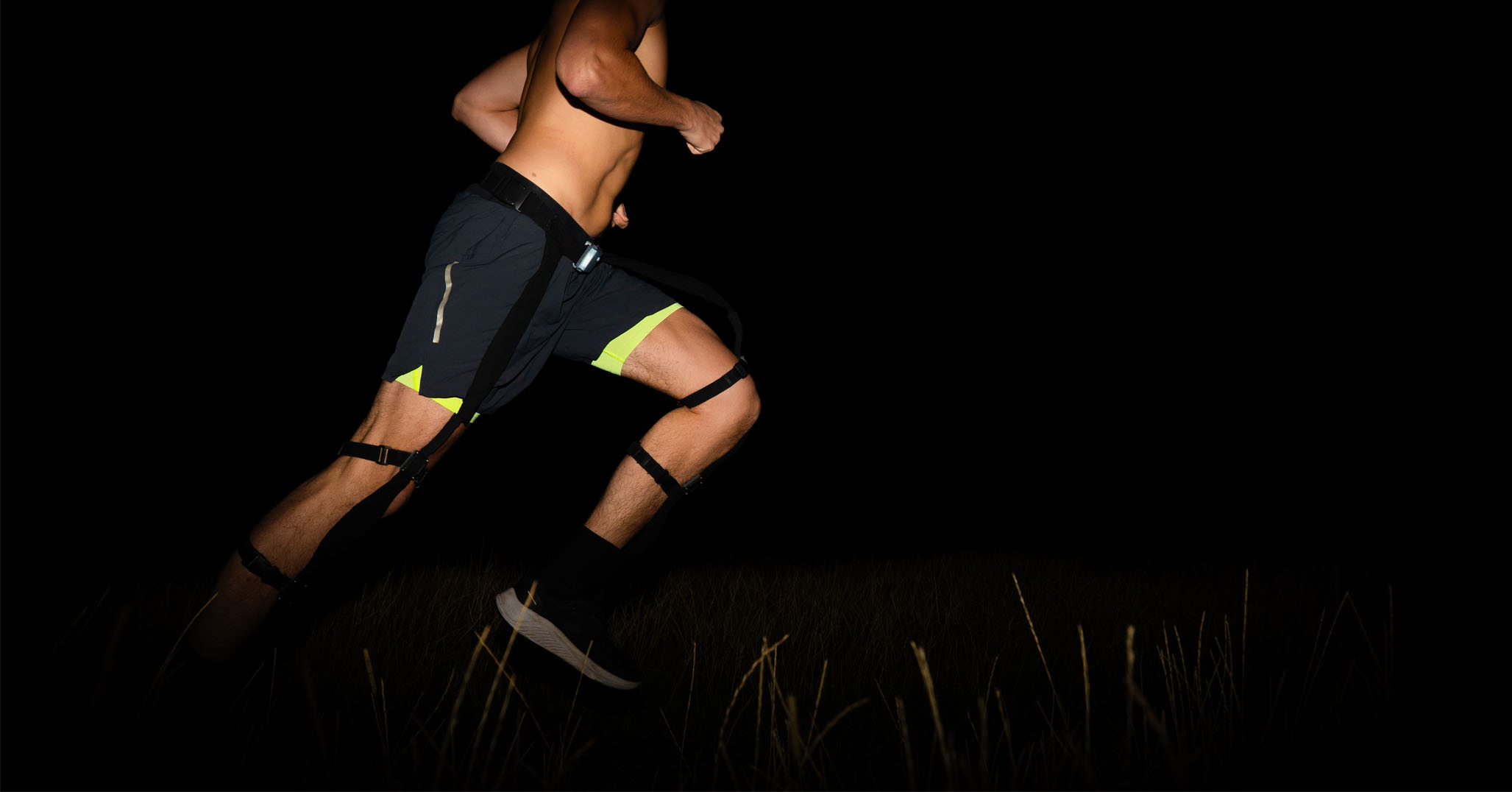

London-based startup upLYFT has launched Track A1, a sensor-embedded lower-body wearable that analyses how athletes move during training. The £399 garment combines inertial sensors across the lower body with force sensing under the feet. It uses the data to reconstruct gait, joint movement, loading, and bilateral asymmetry.
Track A1 is initially aimed at runners, athletes, and coaches, with first units shipping in November. Most wearables tell users how hard they trained and how their body responded. upLYFT is trying to add a deeper data layer by measuring the mechanics of movement itself.
Tracking movement across the lower body
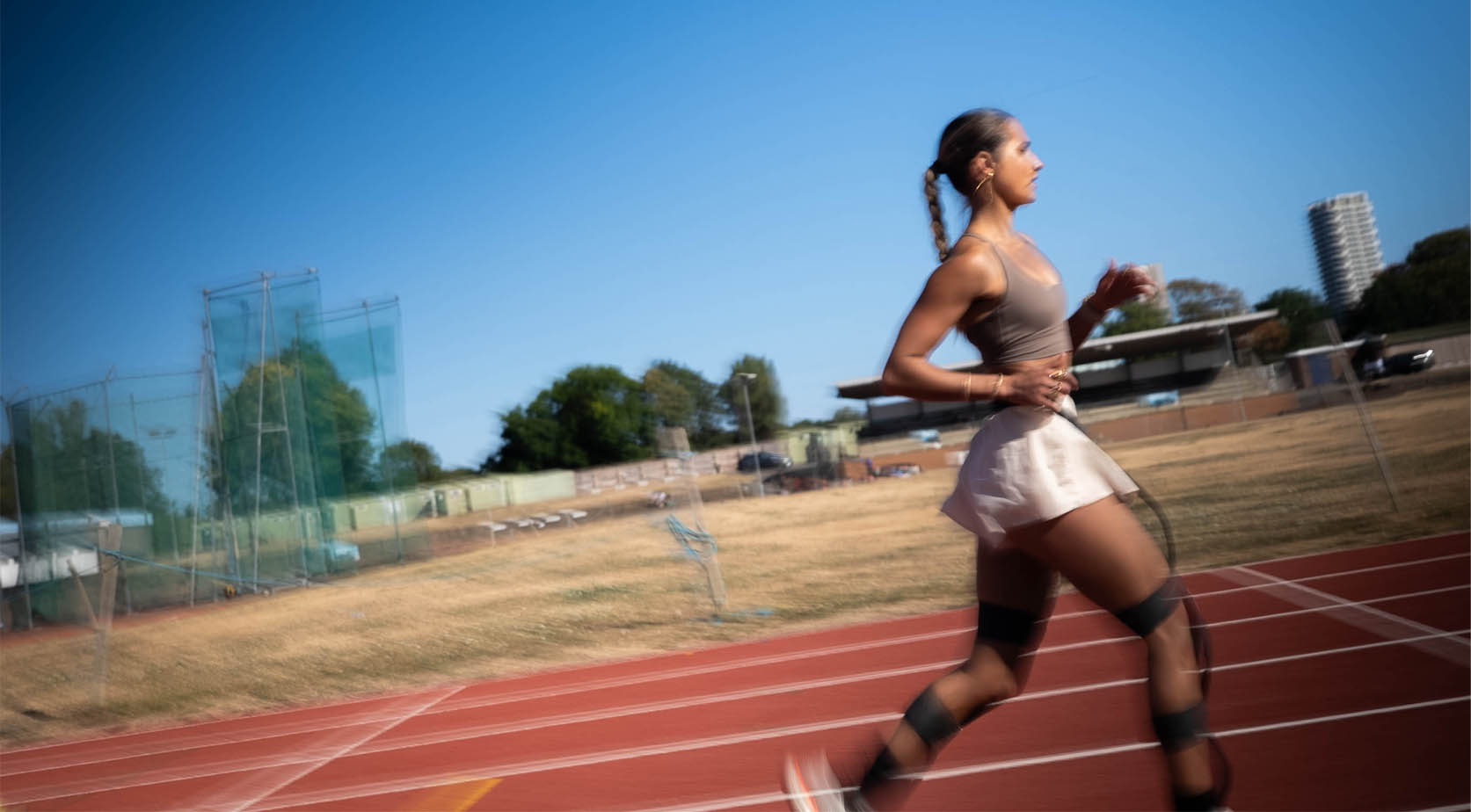
Track A1 combines inertial sensors across the lower body with plantar force sensors under the feet. Together, the eleven biosensors capture movement, orientation, and how the athlete loads the ground.
upLYFT then uses its software to turn those signals into simple-to-understand metrics like power, symmetry, load, and efficiency. It also tracks how movement mechanics change during a session and over time.
Users can view these metrics in a companion app, alongside a Movement Intelligence Assistant that interprets the data and surfaces personalised insights similar to the coaching layers offered by wearables like WHOOP.
“Human movement is distributed across the body, so we felt the sensing system needed to be distributed too,” CEO Aalok Rai tells Senseable. “A single wearable can tell you a lot about one location, but it cannot reconstruct how the pelvis, thighs, lower legs and feet are interacting.”
The electronics are integrated into compression clothing that can be washed after training sessions. The first 350 units are priced at £399 and include one year of upLYFT’s Pro software, followed by a £79.99 annual subscription.
Bringing lab analysis into training
Rai and upLYFT want to turn biomechanical insights into an ongoing training signal. An athlete or coach could see whether movement starts to deteriorate, whether strength or technique work is changing mechanics, or whether one side is increasingly taking more load.
Normally, biomechanics analysis is performed using motion-capture cameras and force plates. Early validation of its underlying medical platform reported an average 97.1% correlation with Vicon motion capture across lower-limb exercises.
That result came from only two participants and measures correlation rather than absolute accuracy, but it supports the underlying sensing approach. More importantly, a wearable can collect movement data repeatedly during normal training, while laboratory assessments are typically occasional snapshots.
“Historically, that level of biomechanical analysis has required expensive, specialist laboratory equipment,” Rai said. “We are making it affordable, continuous and scalable outside the lab.”
From performance to rehabilitation
Track A1 is the immediate commercial focus, but upLYFT is building another movement-intelligence platform for healthcare. Its Track M1 system is currently being studied for post-orthopaedic rehabilitation, with an FDA listing targeted for the end of 2026.
The company is also preparing M1 deployments in Asia for orthopaedic rehabilitation and in Australia for neurological screening. upLYFT was selected for the MSWA and Founders Factory neurological care accelerator, giving it access to clinicians and people living with neurological conditions for real-world testing.
“While A1 is the immediate commercial focus, both products sit on the same underlying movement-intelligence platform,” Rai said, “with applications spanning performance, rehabilitation and clinical care.”