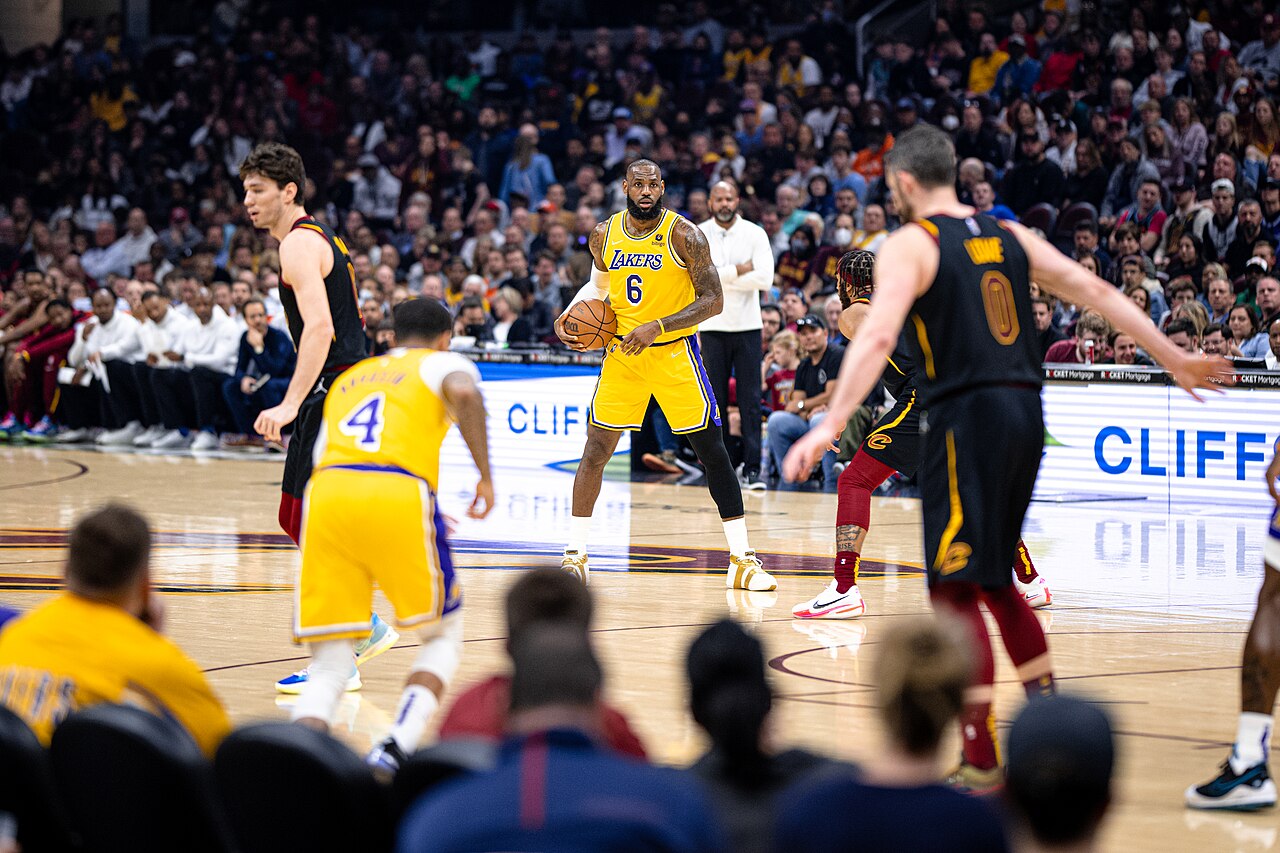

The NBA is testing smart basketballs and referee wrist wearables during selected preseason games, extending its experiments with sensors and connected technology onto the court.
A Wilson-developed basketball has been equipped with a Bluetooth sensor that collects data for possible future use in real-time officiating. For now, the information is research-only and will not affect calls.
The tests sit alongside NBA Launchpad, the league’s programme for piloting emerging technologies across officiating, player health, and basketball performance.
Sensors move inside the basketball
The NBA has been exploring connected basketballs for several years. SportIQ joined the 2025 Launchpad cohort with smart-ball technology designed to combine sensor data with software for performance and analytics.
Its smart ball adds less than one gram to an approximately 600-gram basketball, with the electronics hidden inside the valve assembly. The system could distinguish free flight from contact with a player, the floor, or the hoop. That kind of data could eventually help with calls around goaltending or basket interference.
But SportIQ’s consumer balls also track metrics such as makes and misses, release angle, release time and spin rate. The company says it analyses 192 data points per shot.
The current preseason trial moves smart basketballs from SportIQ's testing into official NBA exhibition games using a new ball produced by Wilson. For now, the data is only collected for research and will be excluded from live calls.
Sensors spread across the NBA
The ball is only one part of NBA's push towards smart sport sensors. Officials are also testing wrist devices that communicate with the Replay Center during reviews, scoring corrections, and clock problems following an earlier Summer League pilot.
The league’s 2026 Launchpad cohort pushes further. Atlas is developing a multi-modal brain-sensing wearable for cognitive readiness. Atlas has since moved from the Launchpad pilot towards consumers. In September, the company opened pre-orders for the $499 Atlas 1.0, with US shipping expected in Q1 2027.
Peripheral Labs uses spatial sensing to reconstruct games in 3D and improve player and ball tracking, while Swish Basket combines cameras and sensors for shooting and performance analysis. The NBA selected the five-company cohort from more than 200 applicants.