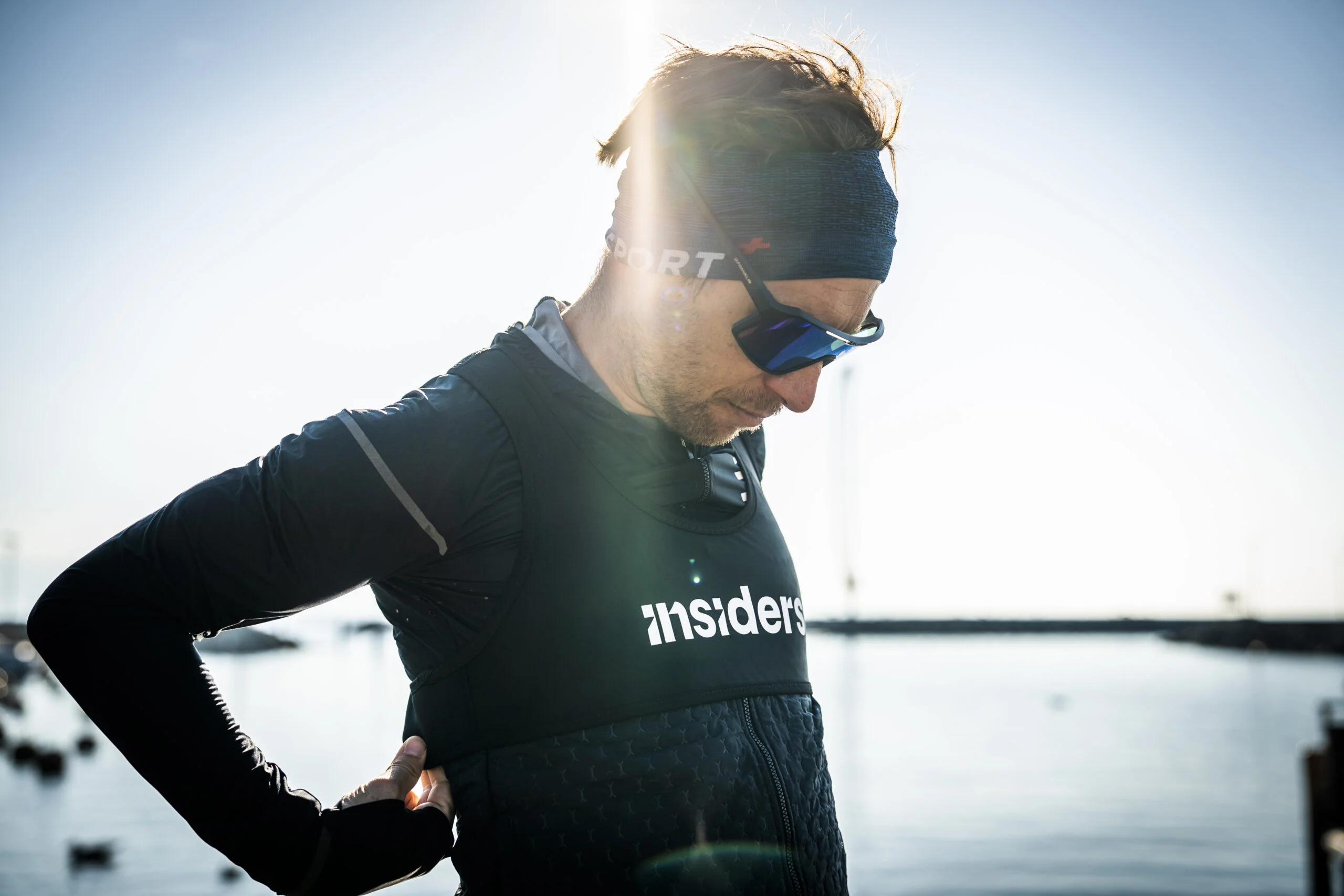

Insiders has launched Infinity, an ultralight wearable that brings data from multiple sensors into one live stream. The 59-gram device tracks location and movement itself, while connecting to other sensors over Bluetooth and sending everything to the cloud over 4G.
Infinity is currently built for sports teams, developers and other professional users. Insiders offers a developer kit and works with organisations to integrate its live sensor data into their own coaching, safety and software platforms.
One hub for multiple wearables
Infinity has its own satellite positioning and motion sensors, allowing it to track where a user is, how fast they are moving and changes in movement. It can then add data from external devices such as heart-rate straps, body-temperature sensors and cycling power meters.
That means an athlete could wear several specialised sensors while Infinity brings their data together and sends it live to a coaching or safety platform. Insiders lists around 15 hours of battery life. If mobile coverage drops, the device stores the data and sends it once the connection returns.
The main proposition is to make multiple wearable sensors easier to use together. Teams using several devices often have to work across separate apps and data systems. Infinity turns those signals into one synchronised feed that other software can plug into.
Insiders moves behind the apps
The launch builds on more than a decade of sports-tracking work from the Swiss company. An earlier Infinity system was developed with support from the European Space Agency and Swiss Timing around the 2024 Paris Olympics, focusing on highly accurate live tracking for outdoor sports.
Insiders previously operated its own performance-analysis platform used by sports teams to review tracking data. In 2025, it sold the platform to ACPA Performance as part of a shift towards B2B integrations. Infinity reflects that strategy, with Insiders concentrating more on the hardware, connectivity and data layer underneath other sports platforms.
The timing also fits a broader expansion of wearable sensing across elite sport, as teams add more physiological and cognitive measurements alongside established metrics such as heart rate and power. A system that can bring those separate signals into existing workflows becomes more useful as that sensor stack grows.