.svg)
.svg)

.svg)
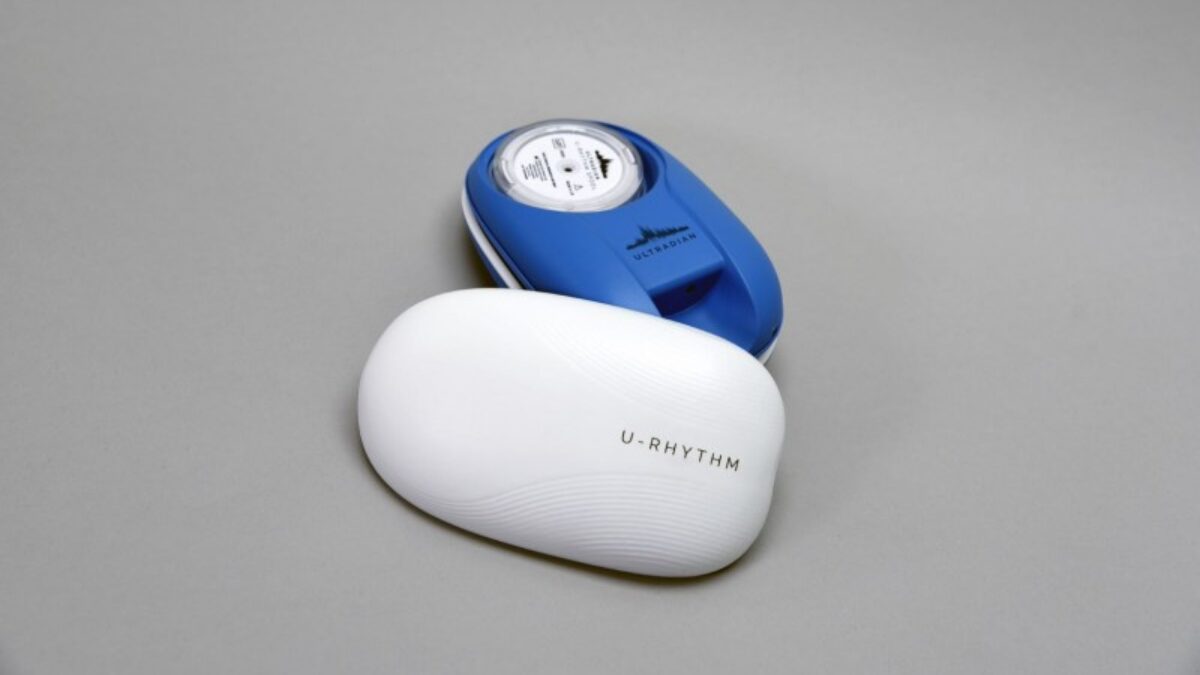

A new study has shown how continuous hormone sampling can reveal patterns that single blood tests may miss. Researchers used the U-RHYTHM wearable to monitor 60 people with primary aldosteronism and found repeated nighttime spikes in aldosterone, a hormone involved in blood pressure regulation.
The findings come as continuous hormone monitoring starts to attract more attention and capital across both clinical research and consumer health.
U-RHYTHM reveals changing hormone patterns
In the Science Translational Medicine study, U-RHYTHM collected samples every 20 minutes across 24 hours while participants went about normal daily life and slept at home.
The device samples interstitial fluid, the liquid that surrounds cells just beneath the skin. It contains many of the same small molecules found in blood and is the same fluid used by continuous glucose monitors.
Researchers found repeated overnight bursts of aldosterone and related steroids. The patterns were strongest in people whose condition affected one adrenal gland. Patterns disappeared after that gland was surgically removed.
U-RHYTHM does not analyse hormones in real time. The waist-worn device collects the samples, which are later analysed in a laboratory. Earlier U-RHYTHM research in healthy volunteers established reference patterns for several adrenal hormones.
Continuous hormone monitoring is moving closer
Consumer hormone tracking is becoming a commercial category within the wearable field, although most products infer hormonal changes from other body signals.
Clair Health, launched earlier this year, uses wrist-based measurements including temperature, heart rate, HRV, and sleep to estimate hormonal patterns. Newly announced Phira takes a similar inference approach from an earring wearable. Both pitches have drawn skepticism around the accuracy of hormone inferences.
A second wave of startups is investing into direct hormone measurement from interstitial fluid. Level Zero Health is developing short-use patches that analyse the fluid directly, while Adaptyx is working on a CGM-like wearable that continuously measures cortisol levels over several days.
U-RHYTHM is set up as a clinical research platform. However, the study shows that repeated, direct hormone measurements can reveal information that occasional snapshots miss and provides additional fuel for the mission towards continuous hormone monitoring.