
.svg)
.svg)

.svg)
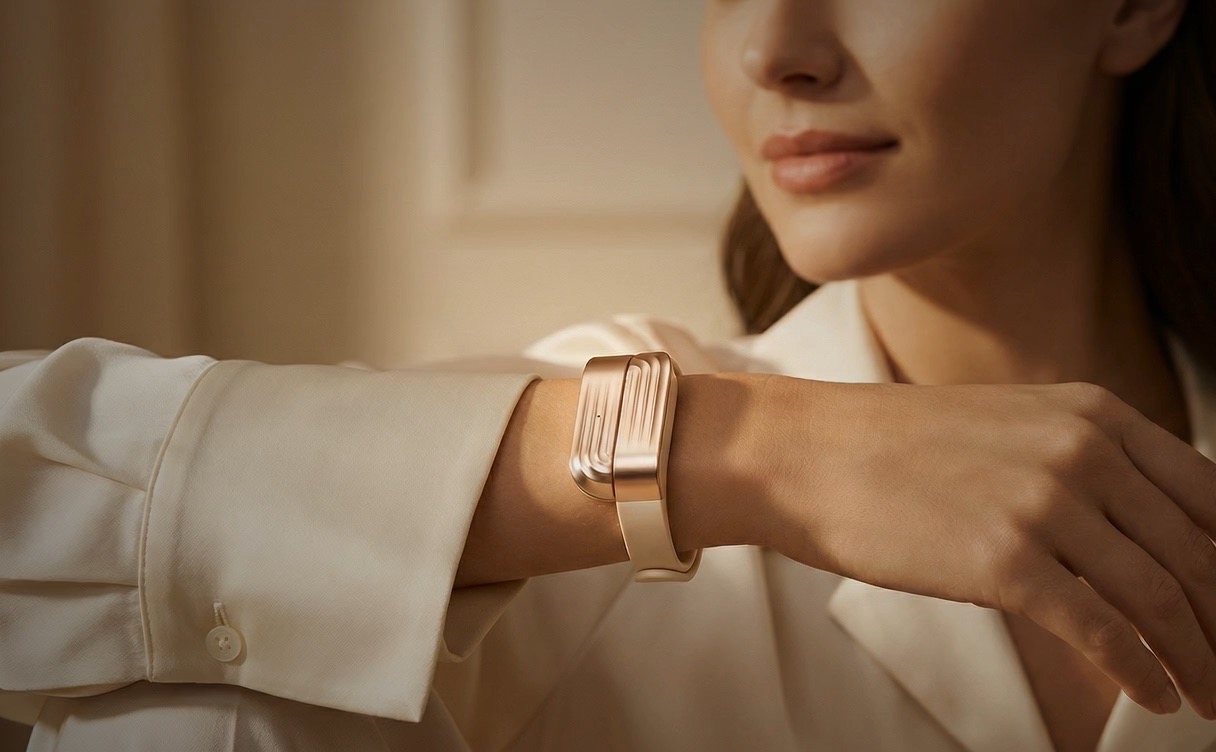

Clair Health is building a wearable designed to continuously track hormonal patterns from the wrist without measuring hormones directly.
The San Francisco startup recently emerged from stealth with an $11.6 million seed round and a bracelet that combines physiological sensing with machine learning. More than 25,000 people have joined its waitlist ahead of a planned November launch.
Inside the bracelet
Clair tracks skin temperature, resting heart rate, heart rate variability, sleep, breathing, and other physiological signals. The company says these measurements produce more than 130 proprietary biomarkers that feed into models of reproductive hormone activity.
Its system is designed to estimate patterns across estrogen, progesterone, luteinizing hormone, follicle-stimulating hormone, and pregnanediol glucuronide.
Clair says its early models reached 94% accuracy when classifying menstrual cycle phases against daily physical validation samples. It also divides the menstrual cycle into nine hormonal sub-phases, giving users a more detailed view than the four-phase model commonly used by cycle trackers.
The company says its models are developed across irregular periods, anovulatory cycles, and conditions including PCOS.
Turning body signals into hormone insights
Hormonal changes influence many of the signals wearables already track, including temperature, cardiovascular activity, sleep, and autonomic function. Clair combines these measurements to estimate where someone is within their hormonal cycle and how that state may relate to changes elsewhere in the body.
The companion app is intended to connect hormonal patterns with experiences such as sleep quality, energy, mood, and recovery.
That approach could also extend beyond menstrual cycle tracking. Clair is positioning the platform around longer-term hormonal health, including perimenopause and menopause, when patterns can become more variable and individualized.
Testing the claims
The key question is how accurately those physiological patterns can identify underlying hormonal changes across different users.
Clair is launching an independent clinical study through the Gladstone BeeHive program and plans to publish peer-reviewed results comparing its models with clinical hormone measurements.
That validation will determine how much additional information Clair can extract from signals already common in modern wearables.
For a deeper look at Clair and the neuroendocrine science behind the product, read the full Neurofounders piece.

.svg)

.jpg)