
.svg)
.svg)

.svg)
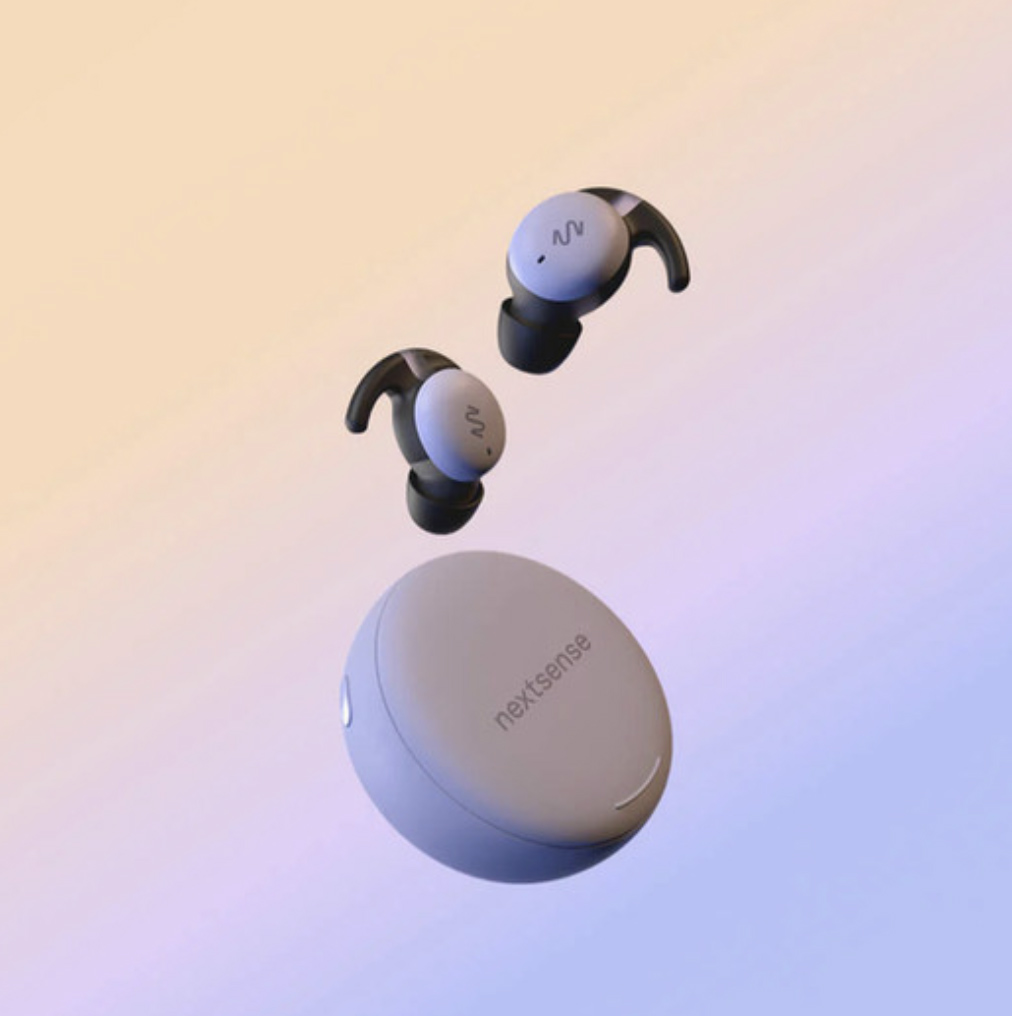

NextSense raised $16 million to commercialize a pair of sleep earbuds that measure brain activity directly. The Mountain View startup, which spun out of Alphabet’s X, is building Smartbuds with six in-ear EEG sensors designed to track sleep and adjust audio in real time.
The Series A was led by Ascension Ventures, with Satori Neuro and Corundum Neuroscience Fund also participating. The funding is aimed at scaling manufacturing, consumer sales, and research around the technology.
What the earbuds measure
Unlike rings and watches, which estimate sleep stages using signals such as heart rate and movement, NextSense places EEG electrodes inside the ear.
These sensors record electrical activity generated by the brain throughout the night. NextSense uses that signal for sleep staging, alongside motion sensors and the more conventional hardware expected from wireless earbuds.
The ear is an interesting location for EEG. It provides relatively stable skin contact without the hair that can interfere with scalp electrodes, while fitting into a form factor consumers already use for hours at a time.
From tracking to changing sleep
NextSense is also using EEG to influence sleep. Its Slow-Wave Boost feature detects deep sleep and delivers precisely timed audio intended to strengthen slow-wave activity.
The company has reported increases of up to 50% in slow-wave metrics among early users, although those figures came from internal and early-trial data.
That makes Smartbuds a different proposition from most sleep wearables. The product is trying to both directly measure the neural activity underlying sleep and respond to it in real time using the signals required for precise intervention.
For a deeper look at NextSense, ear-EEG, and the evidence behind its sleep technology, read the full Neurofounders piece.

.jpg)